Showing posts with label fantasy. Show all posts

Sunday, August 24, 2025

The Last Shield by Cameron Johnston

Look, Cameron Johnston is on my insta-buy list, but he already had me with "a gender-flipped Die Hard set in a mysterious castle". So, The Last Shield pretty much checked all my boxes as I read it. First off, our main character, Briar, is not some young slip of a thing who's going to save the world while making goo-goo eyes at some shadow daddy. She's an older, stubborn-as-heck warrior – a commander of the elite Shields whose task it is to protect the lord of Sunweald and guard the stronghold – a structure that's rather ancient and may well have a secret or three buried deep. Secrets that are, in my opinion, better left undisturbed.

But here's the rub. Briar's not young. She's got a gamey knee, and she's no longer at the peak of her physical fitness. In fact, she's pretty darned close to retirement. And while she's had a pretty good track record keeping her charges safe, she's well aware of her own shortcomings. Even if she will do her utmost not to admit this to anyone – which at the start of where we meet her in the story, we see is to her detriment.

I don't want to hie off into spoiler territory, and the tagline of this book pretty much already tells you that shiz will be sailing south in a big way, what I can tell you is that *any* of Cameron's novels will have a) plenty of humour, b) oodles of ultra violence, c) a cracking pace, and d) meticulous research. 

It's the latter that I really do appreciate – he knows his weapons and tactics. He creates a believable world that feels plausible, even if we're dealing with the supernatural. As a woman fantasy reader of A Certain Age, I appreciated reading a strong female lead who works around her physical handicaps and relies on her experience, her sheer determination and stubborn will, and her wits. Briar is up against what appears to be an insurmountable obstacle, with multiple foes who are stronger and better armed than her, and yet she doesn't let that stop her. Yes, her knee is killing her, she's uncomfortable most of the time, but she's also gosh-darned unstoppable. She's also a frigging good role-model for a young king-in-waiting who doesn't end up going full Joffrey. (And thank goodness for that.)

Anyhow, this was a cracking good read, with action, mystery, and magic aplenty, in a setting that recalls themes of the European Bronze Age. 100% recommended for lovers of sword-and-sorcery fantasy with a side order of dark humour.

Saturday, April 12, 2025

The Priory of the Orange Tree by Samantha Shannon

I read The Bone Season by Samantha Shannon yoinks and yoinks ago, and I recall enjoying it, so I was certain that when I picked up The Priory of the Orange Tree that I'd enjoy it. Her writing is often hyped and in this case I'd say that the hype is warranted. Shannon writes the kind of fantasy I can sink my teeth into, and her solid grip on evoking a sense of history and place in her writing is what keeps me reading. But also, the covers. Oh my, Bloomsbury has outdone themselves with the covers – and not only for The Priory but also for the other book in this setting that is currently sitting next to its chum up on my bookshelf – A Day of Fallen Night. These are pretty books that look simply delightful in my permanent library, avid book dragon that I am.

Speaking of dragons, this book has 'em. 

We meet TanĂ©, a dragonrider; Ead, a mage belonging to a secret order who must safeguard a queen; and of course Queen Sabran who must face great adversity to rule her land. I don't want to go into too many particulars – this is way beyond the scope of this review, but I will touch on themes. We do have an outside, existential threat that reminded me somewhat of The Lord of the Rings in terms of the world-breaking aspect that the different protagonists face. It's a ticking clock, if you will, with it being quite clear that if East cannot treat with West, then everyone's doomed.

Sabran is very much a Queen Elizabeth figure, while our enlightened meddlesome mages with their orange tree are suggestive of our Assassins or yore, and of course our dragonrider's culture is very much a nod to Imperial China – and it's really a lovely combination, with plenty of adventuring and derring-do. And the sapphic angle was wonderful to see so effortlessly front and centre.

But...

Of course, there's a but.

While the story starts off strong, and Shannon has oodles of awesome happening, I feel that she falls afoul of the the law of 'too much awesome'. One of two things should have happened: the novel should have been reeled in and simplified with perhaps fewer subplots and viewpoint characters in order to focus more on shoring up the stronger main arcs or, alternatively, it should have been expanded into two or three books, with more attention given to fully developing all the narrative arcs.

While I still found this an entirely enjoyable read – enough so that I immediately purchased the next book in this setting, I felt that about 3/4 of the way in, Shannon suddenly came to the startling conclusion that she needed to wrap the story. Whether this was due to the publisher's deadline or a self-imposed one, who knows, but the last quarter of the story feels somewhat dashed off. She gets off to a strong start but then either lacks the will or the wherewithal to see it through to the end. And this is a big book – one I'll likely read again in a few years. The world is big enough that it wouldn't have hurt to develop this further to give The Priory a more dynamic ending. It's not a deal-breaker, but definitely a thought I've had.

As you can most likely gather by now, I feel quite strongly about Samantha Shannon's writing, enough that I'll go on a limb. I really love what she's doing, however, and I'm glad that she's getting the opportunity to tell her stories.

Tuesday, March 18, 2025

Witchmark (Kingston Cycle 1) by CL Polk

This one's been on my radar for quite some time, and turned out to be every bit as enjoyable as I'd hoped it would be. Witchmark by CL Polk brings us a recognisably modern fantasy setting reminiscent of early 20th century London, where the elites control magic and use it to manipulate the world (and by default others). This is very much a story that engages with the ideas of class consciousness while also unpacking the issues surrounding countries with jingoistic, colonial aspirations who seek to wage foreign wars. I'd say this was very much a parallel with Britain's actions in India, instead it's Aeland vs. Laneer.

Our magically gifted main character Miles Singer would have spent his days in a gilded cage, enslaved to do his family's bidding. Instead, he sought to flee, by going to fight in the war. While there, he had the opportunity to reinvent himself and start fresh with a new identity back home, working as a doctor, where his skills as a healer can go some way to repairing the incalculable damage that has been done to others. 

Yet he gets dragged into conflict nonetheless, torn between his desire for freedom and navigating the Machiavellian power plays of the nobles who are always hungry for more power. Added to this, he crosses paths with a man who's dangerous to know and love. 

With themes centred on the class struggle and freedom from oppression, this little book packs a powerful message. I am definitely going to hunt down the sequel.

Saturday, December 14, 2024

All the Devils by Catelyn Wilson

Dark academia with serious gothic vibes is always my jam, so I was totally on board to give All the Devils by Catelyn Wilson a shot. We join Andy as she embarks on a mission to solve the mystery of her sister Violet's disappearance. Violet might apparently be dead and buried, I mean, heck, Andy even saw her body before she was interred. But one clue – a missing tattoo – has set Andy on Violet's footsteps that lead to the rather gloomy Ravenswood Academy that is bursting at the seams with secrets. And yes, a rather enigmatic love interest who has a Huge Secret.

As a reader, I enjoyed the mystery element, and most certainly the setting, and things do get rather out of hand in terms of the chthonic weirdness factor – and in a way that I found rather aesthetically pleasing. I did feel that the characterisation for Andy is a little thin on the ground in terms of interiority – she's very much in the present, but there's not enough sense of how she connects with a larger world in terms of parents and friends, and her past. So it's more or less like having a first-person viewpoint for the present, which is fine, but I could have used a bit more interconnectivity and layering. This is a fault I've found with quite a fair amount of YA, that has characters existing almost in a narrative vacuum. Not a dealbreaker here as I quite enjoyed the story. I also feel that as a main character, she could have been a bit more proactive, but then again, that's also just me. 

In terms of world building, this is all pretty generic on the surface mix-and-match – so nothing earth-shattering in terms of fresh takes on assorted standard mythologies. This may annoy some. Didn't blow me out of the water, but as stated earlier, I enjoyed the aesthetics, even if I'd have liked a deeper dive. It did mean, eventually that the pacing/suspensive payoff was a bit underwhelming for what was otherwise an enjoyable story.

Sunday, November 17, 2024

The Book of Atrix Wolfe by Patricia A McKillip

Part of what I love about trawling my local secondhand bookstore, which reminds me rather a lot of the store that we see in the opening of The Neverending Story film that traumatised me as a child, is that I'll often find books there that won't stray to my local Wordsworth. The Book of Atrix Wolfe by Patricia A McKillip is one such, and I really wish I'd read her writing sooner.


McKillip sadly passed away in 2022, and I feel that she's one of the voices in fantasy fiction who is chronically underrated in the genre, and one I'll happily hold up next to the likes of Ursula K Le Guin and Tanith Lee. 

The Book of Atrix Wolfe is a lush, nuanced tale, and the real treat is really the way that she crafts her story – the poetry in each paragraph, the images, sights, and sounds that beg you to keep this book on your shelf to reread at a future date. The story itself is deceptively simple, involving a wizard who, in his hubris, wreaks great destruction that unleashes a darker magic, and a faerie queen who loses her husband and daughter, and how a young wizard must work to right an ancient wrong.

And it's McKillip's magic in describing the environment, food, and the smaller details of the lives of the folks in the kitchen of a great castle that shines for me. So much exquisite detail. This book is very much a primer for fantasy authors who wish to craft beautiful prose. Or for readers who wish to immerse in a slowly unfolding fairytale filled with awe and wonder to be savoured.

Sunday, November 10, 2024

Sins of the Past by JD Franx

So, JD Franx is one of my recent discoveries off Audible, and while JRR Tolkien they are not, there's something to be said for their pacing and ability to hold an action-packed tale that is engaging, and that makes you care about the characters. Sins of the Past is a prologue for their The Darkness Within saga, and gives you the backstory and setup for Yrlissa Blackmist. She's an elven assassin and she's gone deep undercover. The only problem is, she's fallen in love, settled down, and started a family – while on the job.

This obviously presents a problem for not only those who deployed her, but also means that her family is now vulnerable to forces beyond their ken.

One of the bones that I do pick with fantasy is that often we don't see enough emotional conflict for characters who're constantly on the go with their adventures vs. their personal lives – so this is the kind of high stakes vs. personal stakes story that really introduced some great conflict. This being a prologue, it's more a teaser, really, and gives you a little background for a character without dumping reams of exposition on you. I'm most certainly invested in Franx's writing, and if you're looking for an accessible fantasy series, this is is one of them. Their writing is easy on the eye and ear (depending on whether you're going for the Audible editions), and while not overly complicated at least has sufficient depth to the setting and characters' motivations to keep things engaging.

Of course I must add that I initially picked up this title because I'm a HUUUUGE fan of narrator Simon Vance, who could read me a telephone directory and my ears would be happy.

Sunday, June 2, 2024

A Thing Immortal: A Tale of Western Horror by Barry K Gregory

I'm a huge fan of indie books. I've found, of late, that the stories I encounter in them are often far more inventive and unconventional than what I find with their traditionally published brethren. A Thing Immortal by Barry K Gregory is one such book. This story is a glorious mashup of the American West that exists only in popular culture with horror – that's the best way to explain it. I picked it up last year when it was a contender in SPFBO.


Gregory plays loose and fast with history to concentrate rather on a story of gradually unfolding mystery and dark terrors, as we follow the doings of a small handful of characters that include a Native man who can fly on borrowed wings, an old gunslinger, a Black bounty hunter, and a mysterious girl. Oh, and a massive spirit wolf. 

I think what I liked the most about the story was that it didn't pull its punches. There's some seriously dark stuff happening here, reminiscent of early Stephen King, that left me feeling gritty behind the eyes. And I liked the fact that Gregory doesn't explain everything – he leaves much up for me to fill in the gaps, which is something else I appreciate. Yeah, so Trigger Warning time, there is some seriously Bad Stuff that happens to the girl (as can be expected in the context of the story's setting), but it's not on screen so to speak (thank dog) but if mention of this sort of thing in a story does bother you, perhaps this one is not for you. Beyond that, the setting is pretty brutal in how all minorities are handled, so be warned, there are people doing and saying things that wouldn't fly in a more civilised setting.

This is a solid read, and while there were a few little typo gremlins here and there, they didn't harm my overall enjoyment of a solid story that wraps with an almost Gaimanesque conclusion.

Wednesday, May 8, 2024

The Serpent's Quest has arrived

Before what I now fondly call the Great Panini, I laboured under the assumption that 2020 was going to be my year. I'd seen the release of my first traditionally published novel which had gone on to win an award or two, and I was due to appear at a few Comic-Con Cape Town panels, as well as a bunch of literary festivals. Go me. Then not. But let me backtrack a wee smidge.

October 31, 2019, Toby and I were sitting in the hotel lounge after we won our prizes, and we struck on the bright idea to collaborate. We had these grandiose ideas of a trilogy we could quickly put out. But even the best plans sometimes make detours (as we were to find out), and those three books quickly became four, and then five –The Splintered Fool series. 

Which we pretty much wrote during lockdown, and kept me sane as all my carefully laid plans turned to ashes, and then continued when the world slowly slid back into some semblance of regular abnormality. (Is there even such a thing as a New Normal? Ugh, I hate the term.)


I am now inordinately pleased to say, that after half a decade of hard work, writing, revising, editing and doing all the icky production stuff I won't bore you spitless with, we've got book 1, The Serpent's Quest, now live. It's available in paperback and ebook. Go get your copy now.

If you, like us, are a huge fan of adventure, magic, quests, elves, dragons... Maybe with a spot of tomb-raiding with a side-order of dastardly pirates, we've got you covered. Oh, and mad gods. Or, rather, a mad god.

Toby has this to say, "When I consider what makes me happiest about having written The Serpent’s Quest, I’d have to say: seeing a vision fulfilled. It’s hard to believe it was almost five years ago that Nerine and I began discussing a collaboration. 'We’ll write a book together' became three… then five… books, as we unspooled the narrative we’d so casually discussed, exploring realms that became more substantial the deeper we delved. I’m proud to say, we let our characters lead us and never stinted in telling their story. There was no knowing, when we planted those first seeds, that they would grow so far beyond our wildest expectations, but now I look back in wonder. For all the words we crafted, there are few to express the profound satisfaction of seeing the first book released, or the high hopes I have for those to follow."

And I'll close by saying, this work has been a lot rather like me and Toby were storytelling to each other as we went along. We're both huge fans of gaming and ttRPGs, so much of that sort of energy went into the narrative. I'm also pleased that I've had one of South Africa's top comic book artists, Daniël Hugo on board to assist with the cover art. Collaborations with him are always excellent, as it's as if he possesses an advanced degree in mind reading to fully get what's going on in my head.

What's next? We'll be typesetting book 2 next, and book 3 is currently in its last revision stages. Alas, I do not possess an army of clones, but we can confirm that the entire series has been written. We promise there is no GRRM The Winds of Winter scenario threatening to unfold here.

Wednesday, August 23, 2023

The Only Harmless Great Thing by Brooke Bolander

I'm always of the opinion that there are not enough stories that are told from non-human protagonists, and The Only Harmless Great Thing by Brooke Bolander gave me a dip into something quite different from my usual fare. It's alternative history, with a little magical realism thrown in that re-envisions the horrors of the Radium Girls by way of pachyderm lore. This shortish tale shakes its fists at the injustices of this world perpetrated by capitalism, the patriarchy, and our species' love for cruel spectacle.


This is not an easy read, and Bolander's style is simultaneously dream-like and poetic, while offering some hard hitting themes as she slip-slides between a human narrative and elephants' meanderings and myth. I honestly don't have much more I can say about this story except that it left me scratchy behind the eyes – which can be both a good and bad thing.

I suspect this is one of those titles that's not going to work for those who take issue with strong feminist themes in literature. All the viewpoint characters have some form of issue with males, for their own reasons. I'm able to separate myself from the characters, so I didn't ave any issues with this. Additionally, Bolander does not spoonfeed readers as she shifts between different points of view without overtly identifying the viewpoint character – so you're going to have to read for contextual cues quickly to figure out which of the protagonists is at the helm. Honestly, this didn't bother me either, as those cues are pretty obvious to attentive readers. If she was intending for this to be a jarring experience for readers, it does work.

Bolander revels in narrative ambiguity, with many questions unanswered – I like stories that challenge me. And maybe, because this is a shorter read, it's easier to digest in small bites, and it's memorable. 

Wednesday, July 12, 2023

Joust (Dragon Jousters #1) by Mercedes Lackey

On my continued mission to pick up books by authors whose works helped shaped me as writer, I'm so glad I've made the time to read Joust by Mercedes Lackey. For those of you familiar with Jane Yolen's and Anne McCaffrey's worlds, you'll be on familiar turf with this one, which I feel will appeal directly to people who enjoy the minutiae of caring and training dragons. If you're looking for a high-romping adventure with flashy swords and fire-breathing beasties, this is not your book.  


We start the story with Vetch, an Altan serf tied to the land that has been conquered by the Tian people. A twist of fate sees him serving as a dragon boy for a well-respected Tian dragon rider, or jouster, as they are called, and he quickly immerses himself in this new, fascinating world. Vetch realises that the dragons might be key to his freedom, and when certain events played out (I won't spoil), I could already see where the story was headed. And oh, was it satisfying.

Now apart from the dragons, the other reason why Lackey's world scratched my itch was that she based her Tian culture on the ancient Egyptians, which was a bold choice that I enjoyed very much, even if some of the naming conventions were a little too close to the original. Then again, I am an armchair Egyptologist, so I know perhaps a little bit more about the culture than the average Joe Public. As always, Lackey paints a vivid picture that makes her writing easy to immerse into in Technicolor detail. 

The other thing is that Lackey knows her stuff when it comes to falconry, and she's based her dragons' behaviour and physiology on raptors, which helps to lend a veneer of plausibility to the overall premise. (My introduction to her writing was with her Mage Wars books that featured her gryphons...)

The question I keep asking myself is why have I not made a concerted effort to read more of her books. She's an absolute joy, and her stories have thus far never failed to hit the mark with me. 

Joust is an easy-to-read, comfortable fantasy novel that offers a slow build that's clearly an origin story setting up for the three books that follow. I'm immediately rushing off to get the next one...

Wednesday, July 5, 2023

Tigana by Guy Gavriel Kay

Where do I even begin with Tigana by Guy Gavriel Kay? I'll start by saying that this is the sort of fantasy that is set firmly on the shelf of masterworks, as a template that shows how fantasy as a genre can also most certainly be considered a great, nuanced work of literature. Tigana is more than just a tale of political conflict, but it is also a story of people and memory. This is the second work of Kay's that I've read, so my opinion will be based on what I know of his writing – in that he grounds his setting very much on real-world spaces and cultures. In this case, Renaissance Italy in terms of theme and setting. 


Our space is known as the Palm – a peninsula of often warring provinces that has been divided between two sorcerers who have set themselves up as tyrants. Each maintains his connection to his home but lords it over the territory that he has claimed. One province – Tigana – has been obliterated in an act of magic in revenge for the death of a beloved son. No one who has not lived there, can hear its name spoken or speak it. All knowledge of Tigana is erased, its towers of their capital city torn down, and its people scattered. Soon, a generation will be born who have no memory of the Tigana that was. Their very identity has been severed from the past in one cataclysmic stroke.

It is in this world that we meet our players – a large-ish cast of complex, morally grey individuals. And what Kay does well, is to subvert your loyalties throughout, so that you begin to realise quickly that there is no black or white 'truth' to any given situation, but rather multiple layers. You see heroes in villains and vice versa, and overarching all this is the notion of power and memory. Most importantly, I think, is the notion of the stories that people tell themselves to justify their actions, how holding onto the past can be a two-edged sword. When does one let a tragedy slide? What if grief consumes you so that you can't find a new course?

There is so much to unpick with Tigana. The characters themselves almost become placeholders for the questions that Kay asks. His world is full of mysteries, and much like life, we aren't given neat, tidy answers to encapsulate them when the story is done. He tantalises you with a resolution that might be, that would be satisfying, and rips it away in a manner that hurts profoundly, that makes you question whether the ending (or rather the new beginning) you are given is equally satisfying. Or right. Gosh, this book has hurt my heart and my head. This book deserves a permanent place on my bookshelf.

Saturday, June 24, 2023

Shadowblade by Anna Kashina

Shadowblade by Anna Kashina starts off with all the elements that I know I'll love. We meet Naia, a young orphan with astounding martial skills, who is trained up in an order of assassins. We have shadowy puppet masters who are angling to topple an imperial despot. We have a mystery surrounding Naia's birth that is absolutely delicious when she is tasked with taking on a role in a conspiracy to challenge the succession. Machiavellian skullduggery meets fast-paced action. I should have been in my happy place.


I'd say that this book *almost* nails it, but the pacing is just that little bit off. I was deeply invested in seeing Naia as she undergoes her training, yet part of this feels glossed over to where we get her embarking on her first, important mission. A too-obvious, too-easy romance liaison gets tossed in, with repercussions I called the moment we first hit the bedroom, but perhaps the thing that kinda made the entire novel fall a little flat for me was when the antagonist's identity was revealed far too early. And that, for me, made me feel as if we missed out on much of the tension. Not once did I fear that my protagonists would succeed – and I would have liked to have had more of a sense of impending doom.

The setting, in the second half of the novel, that takes place in an imperial palace, is a stage set that is ripe for a more complex treatment – especially if we could see the introduction of more opposing factions, but I feel that this last part of the story gets rushed. I feel with a little careful planning, this could easily have been a very satisfying duology or trilogy, as there is so much material to mine in the setting. Is this still an entertaining read? I'd say yes. This is not the first of Kashina's novels that I've enjoyed, but this one's just not quite the five-star read I was hoping for. But it's still good. It has its moments, and what Kashina does well is write excellent fight scenes involving characters who are likeable and relatable.

Monday, February 13, 2023

The Veiled Flame by LR Eldr

Every once in a while I'll run full tilt into a review book that makes me ask myself what on earth I just read, and unfortunately this is one of those titles. Look, I'm one of those reviewers who'll read traditionally and self-published works with equal enjoyment, and in general my spidey senses don't often let me down when it comes to saying, "hey, I'll read this" – because I can usually tell if the cover is awful, ten to one the author hasn't bothered to spend money on an editor. Here, they didn't have a half bad cover, even if the typeface is one I'm heartily sick of seeing. EVERY self-published fantasy novel (and some trad-pubbed, too seems to have a wet one for this font. Author LR Eldr clearly blew their budget on the cover that they slapped on this rather unfortunate manuscript that wasn't ready for publication. Not by a long shot. In fact, I would compare it favourably to the immortal The Eye of Argon by Jim Theis. If you know, you know...


I've been agonising for weeks on how I'm going to explain The Veiled Flame to other people who might stumble upon this review, and I've come to the conclusion that I don't really have words. This document needs a developmental editor. And then a thorough bunch of copy editing. And line editing. And proofreading. The whole nine yards, and then some. That's possibly the kindest thing I can say. Beyond the crunchy (and not in a good way) dialogue and the random, inexplicably weird stuff that is weird ... And a story that reads like some sort of gothic psychedelia with rare bursts of half-all right prose, I persevered to the end much in the same way we sometimes rubberneck at a car crash. There really isn't a diplomatic way to express my horror that this manuscript ever saw publication in the first place. 

Generally, I sandwich my reviews, and try to find light and bubbles to lighten the negative, but here I was left utterly gobsmacked. Read this book at your own peril. Or turn it into a drinking game.

Sunday, October 9, 2022

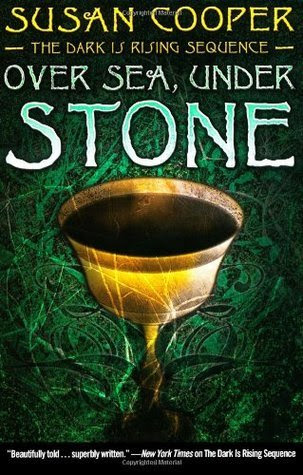
Over Sea, Under Stone (The Dark is Rising Sequence #1) by Susan Cooper

The Dark is Rising by Susan Cooper, was prescribed reading when I was in primary school, and come to think of it, it was one of my first forays into fantasy literature. I don't really remember much about the story, except that it was quite terrifying in places, and many of my fellow classmates absolutely loathed the book and found it terribly dull. I didn't mind it so much, and I think I still finished reading it in its entirety and recall quite enjoying it. Back then it was difficult to find complete series, and I didn't even know until much later that The Dark is Rising is, in fact, book two of a five-book series. Hello, pre-internet days...


So, after a discussion with one of my author friends, I made it my mission to revisit this classic, this time in its entirety, from book one to five. Thankfully, the entire lot is available on Kindle (another minor miracle, IMO) – especially that it's accessible in my region, and I didn't have to trawl second-hand bookstores or import to South Africa at great expense.

Over Sea, Under Stone charmingly starts with three siblings, Simon, Jane, and Barney, who go on summer vacation with their parents to visit their great-uncle Merry in Cornwall. They're renting an old sea captain's house that's full of strange rooms and artefacts, and it's not long before they discover a mysterious parchment that draws the interest of nefarious, inquisitive seekers who are on the trail of an artefact.

One thing that struck me is that this book is very much a product of its time – there is a game the children play that made me cringe somewhat and would never fly if the book were to be published these days. But getting past the somewhat old-fashioned style of the setting and the writing, this is still an amazing book. The dialogue between the siblings feels authentic, like I've heard young people talk. Their concerns also feel exactly like I recall from when I was their age.

At its heart, this tale is a treasure hunt, with the children and their uncle solving puzzles to find an extremely important item that many people – some of whom are rather unscrupulous – will stop at nothing to lay their grubby mitts on. Coupled with this are Cooper's wonderful descriptions of a Cornish seaside town, its people, and the landscape. I really could feel a sense of place. Unlike many contemporary YA books that feel as if the kids exist in a reality bubble completely separate from their adults, Cooper's world gives a strong sense of context. These aren't kids who're going to singlehandedly save the world from a great evil on their own. It's through teamwork and the support of their grand-uncle that they complete their quest, though they do have a fair amount of agency, which I liked.

While this would be considered youth literature, I'd happily recommend this for all ages, from eight and up, if the younger end of this spectrum is already a voracious reader. While supernatural elements are implied, there is nothing outright what can be considered pure fantasy, yet. But I do recall things getting pretty wild in book two, so we'll see when we get there. I'm looking forward to what follows.

Wednesday, September 7, 2022

The Atlas Six by Olivie Blake

I'm almost immediately wary whenever a novel is touted as a 'must-read TikTok sensation with over 11 million views'. It's a clear indication that a hype machine in some shape or form has been working in overdrive. But, I was curious about The Atlas Six by Olivie Blake, and the subject matter itself appealed to me enough for me to make grabby fingers a while back when the opportunity to read the novel presented itself.


The premise is as follows: Six magicians are invited to compete for a place within a secret organisation known as The Alexandrian Society, where they will have access to centuries of hoarded knowledge. The only catch is that one of them will have to die.

I wanted to like this book, I really did, but as the story progressed, I felt as if the author was more concerned with the characters' cleverness than progressing a plot that feels as if it has enough momentum to carry me forward. We also see the story told from different points of view, which in itself is not such a bad thing, save that I felt that there was a lot of sameness to the characters' voices, so that for the first half of the book, while I was trying to get to know them, I struggled to tell them apart.

Small details, like the one character being South African, but none of his inner landscape even suggesting to me that he *was* actually South African, kinda annoyed me. In fact, I found most of the characters all quite bland and somewhat entitled. 

Sure, there was some interesting moral and philosophical talk that happened here and there, but for the most I felt that there was an awful lot of navel gazing, and I kept waiting for the exciting stuff to happen. Because, I mean, hello, magic. One sequence involving Parisa was quite thrilling and somewhat cleverly written, but for the most, not so much.

It's clear that Blake is a gifted writer, and there are moments where the prose shines, but I suspect the fault lies with me, the reader, for not glomping onto the text wholeheartedly. Evidently, The Atlas Six was thrilling for those thousands of other readers who are lauding this novel as a paragon of literary greatness. I'm not one of them.

Tuesday, August 23, 2022

Under the Mountain by Maurice Gee

In my continued quest to track down old stories that made an impact on me when I was younger, I tracked down Under the Mountain by Maurice Gee on Open Library. When I was really young, possibly five or six, the TV series (1981) screened here in South Africa, possibly two or three years after its initial run in New Zealand. I don't recall all the details, except that the Wilberforces (the main villains) scared the ever-loving bejeezus out of me, and ever since then I don't swim in water where I can't see the bottom. It's a really silly phobia to have even as an adult, but there you have it. I blame Under the Mountain.


This is a story about a set of twins, Rachel and Theo, who go stay with relatives in Auckland during their summer holiday. What is supposed to be an idyllic time involving fun in the sun instead turns into a terrifying quest when the twins discover the ominous and seriously creepy Wilberforces who live across the lake. And then, in turn, are contacted by the mysterious Mr Jones, who reveals a galaxy-spanning conflict in which the twins' special relationship makes them central to defeating a great evil.

So, this takes the usual 'chosen one' trope and splits the role equally between brother and sister, which is a nice touch. Rachel and Theo share a special bond, and I enjoyed their interactions with each other. Since this is an older book, stylistically it's quite different from the youth literature I'm accustomed to reading these days; it's written in a loose, third-person omniscient viewpoint, and the author shifts between the two viewpoints of the children fluidly. This wasn't as jarring as I'd ordinarily find it, because in terms of the world building, it's made pretty clear that the kids share a far deeper bond than others, in addition to the fact that they also learn to communicate telepathically.

Things get rather fraught in the story, and Gee does not shy away from awful things that happen, and the stakes are made quite clear (and they're high). His monstrous 'slugs' are as terrifying in the book as they were in the miniseries. I know that there was a recent remake (2009) starring Sam Neill, but I've not heard anything positive about the production, so I've not followed up on it. What I will say is that Gee's writing hit the mark for me – he doesn't dumb down his prose; his young protagonists talk in a way that feels like their dialogue has a ring of authenticity; and the kids quickly find themselves over their heads while facing a cosmic evil that smells strongly of Lovecraft. Gee's descriptions are vivid, and you really gain a sense of place, even when faced with the unreal.

In the spirit of reminding the rest of the world that this book exists (first published in 1979), do consider picking it up if you'd like to get a taste of a middle grade fantasy adventure that doesn't coddle its readers. 

Sunday, July 17, 2022

Aether Shift by Alex Shepherd

Aether Shift by Alex Shepherd has one of those covers that in absolutely no way has anything to do with the content. At a glance, you might be forgiven in thinking it a SF novel, which it's not. Aether Shift is very much a magic-rich fantasy of an epic kind. Our main character Daen is a rebel whose mistake costs him his freedom – he ends up in a slave market, which can be argued is a fate almost worse than death. But to make matters worse, he is purchased by Duke Kieron who is a representative of everything Daen has been fighting against – a man who has a penchant for collecting magical creatures that he controls with the very magic that he despises.


We also meet the shapeshifter Asha, a long-time thrall of Kieron's, who is used to manipulate Daen, who is (obviously) resistant to sharing any intel that might jeopardise his fellow rebels. His cause is not helped by the fact that the king, too, has a rather lethal interest in Daen. Asha does not believe that anyone would want to help her, and she's very much aware that she is a tool in Kieron hands. Daen is a high-value pawn, whether he likes it or not, and it's her job to crack him. She just doesn't expect that she's going to warm to his advances of friendship.

I wasn't quite sure where Shepherd was going with this story, whether it would be a desperate bid for freedom resulting in a quest – but it was an engaging read nonetheless, with plenty of intrigue and fascinating world building, in addition to a well-realised magic system – always good to see. I did feel, however, that this novel could have used a more stringent bit of copy editing. For instance, 'drug' is definitely not the past participle of 'drag', and the occasional modern idiomatic expression crept in that felt out of place with what feels like a baroque-era type setting. And there were the occasional dropped words, grammar gremlins or typos, but not enough to upset me. Overall, Shepherd tells a solid, engaging story that I related to, and after I got to know the characters, I cared about them pretty quickly.

This is a story about freedom, about doing the right thing, even if it's dangerous. This is also a story about about trust – and friendship despite having all the odds stacked against success. It's clearly a first book in a series, and if you're in the mood for a story about slaves fighting for freedom (a noble cause, if ever there was one) then this one will push the right buttons.

Sunday, June 5, 2022

Starless by Jacqueline Carey

I'll kick off by saying that Jacqueline Carey is one of my all-time favourite fantasy authors. Kushiel's Dart, and the subsequent novels set in that same universe number among my beloved epics. So, I had really high hopes when I picked up Starless, especially since it's a standalone novel and I simply don't have the stamina to work my way through entire series at present.


We meet Khai, who's a warrior-monk training in a desert fastness, destined to be the shadow (guardian) of one of the Sun-blessed in a royal family. So, that's the premise we start with, and Carey spends much time in the desert building up Khai's unique situation and allowing us to get to know him. I really got stuck into the story at that point. Then, Khai is taken to meet his charge, and the story kinda starts to fall flat for me.

I get the whole "these two are destined to be close because of the Prophecy" kind of relationship that is akin to an 'insta-love' zing across the room, but the ease with which Khai and Zariya kindle their close partnership felt a little too effortless for me. The concept of the novel, too, while interesting and well realised – with the gods walking among mortals, feels a bit too epic in the sense that I actually struggled to suspend disbelief (!!!). Yeah, yeah, I know what you're thinking. This not-so-gentle reader who happily accepts dragons and inter-dimensional portals stumbling over larger-than-life deities and the relentless pursuit of nasty world-ending critters.

There's a point later where the story performs a sharp, ninety-degree turn into a completely different direction that threw me off, too. Stuff happens, and the affected parties were so calm, once again taking the shift in their fortunes so calmly, it didn't quite ring true. If you lose out on a deal that cost you a lot in terms of your wealth and time, you're not going to be calm about it and wish all parties well, merrily on their way, is all I'm saying.

I feel the main problem with this novel is pacing. We spend a good chunk setting up Khai as a character at the Fortress of the Winds, then arrive in the capital Merabaht, where we are plunged into an Islamic Golden Age-type intrigue. All this comes across as set-up, with Khai turning into a bit of a lovestruck loon that feels almost at odds with his character at the start. Then about halfway through, what initially felt as if it was going to be a novel chock full of courtly intrigue, we are suddenly flung into a sea-roving quest with a completely new cast of characters we simply don't have enough time to get to know enough to care about.

Or, rather, the support cast was intriguing, and I'd wanted to know more.

In terms of the general theme of a world without stars at night, and gods incarnated in the flesh, I kinda called the ending and what would happen. And all I'll say is I was not surprised. There was something quite Frodo-esque about how things were resolved, and from there the story sort of just ends on what I feel is a wee bit of a damp squib. I get the idea that Carey had a fantastic concept for this story but then didn't quite develop it to its full potential. This could have been a trilogy, but instead we had everything squished into one novel that almost felt like a ttRPG in terms of the way the action plays out. Not that this is a bad thing, but it felt rushed halfway through, as if she wasn't quite sure where she wanted to take the story. So we go from intricate detail to rushed, broad strokes – and this felt jarring to me.

My overall verdict is that this could have been so much better. Did I enjoy it? Yes. Was there stuff about Starless that annoyed me? Yes. Carey remains on my list of favourites, but this is not her strongest work.

Thursday, May 19, 2022

Thief Mage Beggar Mage by Cat Hellisen

I've edited or seen early drafts of many of Cat Hellisen's novels and short stories, so it was an absolute treat to have a first look at one of their titles that I've *not* worked on, and it is one that I could simply concentrate on reading and enjoying. Thief Mage Beggar Mage is best described as a heady mix of magic, kinda-Asian-inspired fantasy, courtly shenanigans, betrayal, untenable love, and dragons. What's not to love? Okay, so I admit it, this book ticked all the boxes for me right from the start.


We follow the doings of Tet, who's crippled by a curse from the gods unless he can retrieve a magical artefact. In a world where your true name can be the deadliest currency, Tet's problem (apart from the dastardly divine curse that just gets worse by the day) is the fact that he doesn't know his true name. And as the story unfolds, Tet's quest becomes more and more complicated as he crosses paths with the mysterious Dohza, who is beguiling and enshrouded in mystery. Tet knows better than to fall for the one-armed mage, but as we get to know him, we realise that Tet is not exactly known for his good life choices. Especially when those life choices have him entangled in a plot to unseat The White Prince – a despot who rules the empire with an iron fist. 

I admit I'm a sucker for stories about the underdog who has lost everything, and somehow has to claw his way back out of the deep hole which, let's be honest, he dug for himself, and Tet fits that mould perfectly for me. He's pitiable, yet has a peculiar kind of magnetism about him that I appreciate. Forever an outsider, he has a unique perspective of the society in which he operates. 

Another hallmark of Cat's writing is that there are often echoes of well-known fairy-tales laced with queer themes immersed in their writing, and this story is no exception – Cat pays tribute to Hans Christian Andersen's The Tinderbox, complete with giant magical dogs and fabulous riches, and all the wonder you can ask for. And what I love even more about Tet is that he's most certainly *not* the hero of this tale. I'd describe him more as a catalyst or linchpin for greater events that unfold. No shining, magical swords here, but rather a battered lute and a begging bowl. Oh, yes, and that all-important whiff of dragons.

If you're in the mood for a lyrical, textured fantasy novel redolent with rich imagery and intrigue, then this will hit the mark. The conclusion was perfect, bringing equal measures of "Ah, yes" and "Oh, my heart." Have some tissues handy. Or maybe have a quiet place where you can go lie down once you finish the book.

Monday, January 31, 2022

The Armored Saint (The Sacred Throne #1) by Myke Cole

Heloise is just an ordinary girl who helps her father, who does a lot of scribing work. They're well respected in their village, but all is not well in this world where an Inquisition-type organisation known as the Order hunts wizards. After all, it's thanks to wizards and their magical meddling that demons can find their way into Heloise's world to wreak havoc.


The Armored Saint
by Myke Cole is the first in a trilogy of stories, and I will say this much: I was drawn right into the world. Cole likes to take your preconceptions, turn them on their head, and then when he lulls you into a false sense of hope, he pulls the metaphorical rug from under your feet. Heloise as a protagonist is earnest yet awkward and her mistakes and missteps only add to the greater unfolding disaster.

She and her community face real horrors, where a religious authority holds great sway over their lives so that ordinary, good people are often coerced into doing bad things in the name of good – and Heloise questions the way things are done, and the outcomes of her doubt are not always to her advantage.

That which, at first, seems fair may be foul, and that which is foul may really be a last bastion of hope against the forces of evil – and ignorance of the way things actually as opposed to how one may wish them to be are may well prove deadly. There is a lesson here.

As far as fantasy novellas go, this one gripped me from the start, and the next book in the trilogy is an insta-buy for me. If you like your fantasy gritty and demon-haunted, then look no further than this offering.